What is a saber core?
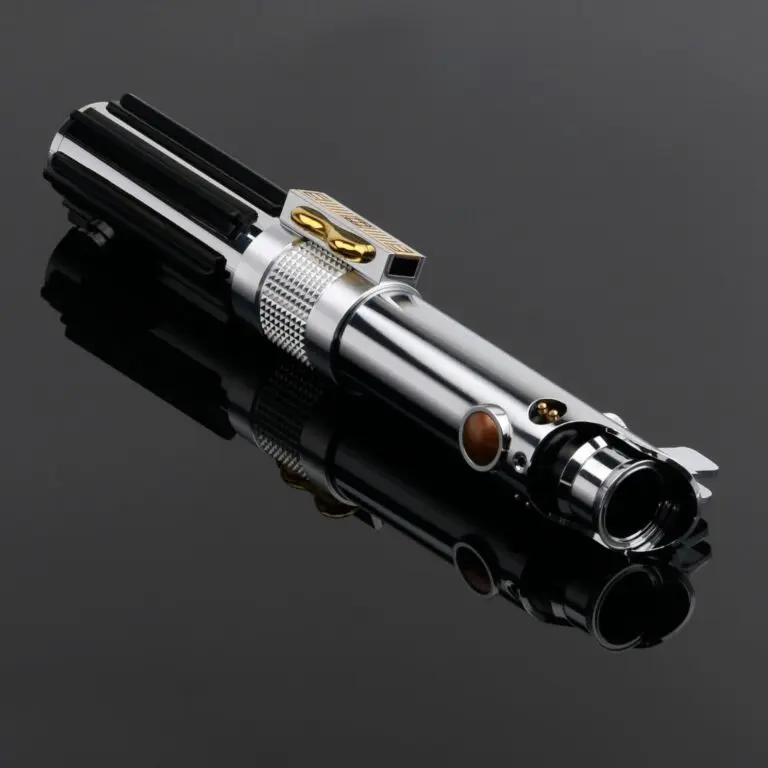
A saber core is the electronics inside the hilt — the board that ignites the blade, plays the sound and decides what the light can do. Everything else in a build hangs off what the core allows.
There are five in the ARTSABERS catalogue, and they fall into three tiers. Baselit (S-RGB, RGB-X): the light sits in the hilt and shines up a hollow blade. Neopixel (Xenopixel V3, SNV4 PRO): a strip of individually addressable lights runs the length of the blade. Proffie (Proffie 2.2): the same neopixel blade, with the firmware opened up so you can edit it. All five give you infinite blade colours and Bluetooth. What separates them is where the light lives, how much you can change, and how hard you can hit with it.
The tier is also where the money moves. On the same hilt design, stepping from baselit to pixel adds roughly a hundred dollars. Inside a tier, the two cores trade places depending on the hilt. This guide walks through each core in order. If you want the short answer, the TL;DR above has it.
S-RGB
S-RGB is where the ladder starts. The light sits in the hilt and shines up the blade, and the blade is a hollow tube with no electronics in it. That is the whole reason a baselit saber takes contact well: there is nothing inside the blade to break.
What it buys you is the same baseline every core gets — infinite blade colours and Bluetooth — on a blade built for heavy duelling. Nearly every baselit hilt we sell carries that rating. 185 complete sabers run on S-RGB, from $84.99.
What it costs you is range. It has the smallest sound library in the catalogue, 27 stock fonts. There's no smooth swing and nothing to program, and the blade lights from the base rather than along its length. If none of that matters to how you'll use the saber, none of it is a cost.
Best for
RGB-X
RGB-X is the same baselit construction as S-RGB — light in the hilt, a hollow blade, and the heavy-duelling rating that comes with it. The difference is the sound library: 16 stock fonts against 27.
"One step up" is about sound, not price. The cheapest complete RGB-X saber is $89.99, below the cheapest S-RGB at $84.99, because the price follows the hilt design rather than the core. With 2 complete sabers, it is also the widest baselit range we carry.
The costs are the ones S-RGB carries. No smooth swing, nothing to program, and a blade that lights from the base rather than along its length. If you want more sounds and the tougher blade, those are trades you're already willing to make.
Best for
Xenopixel V3
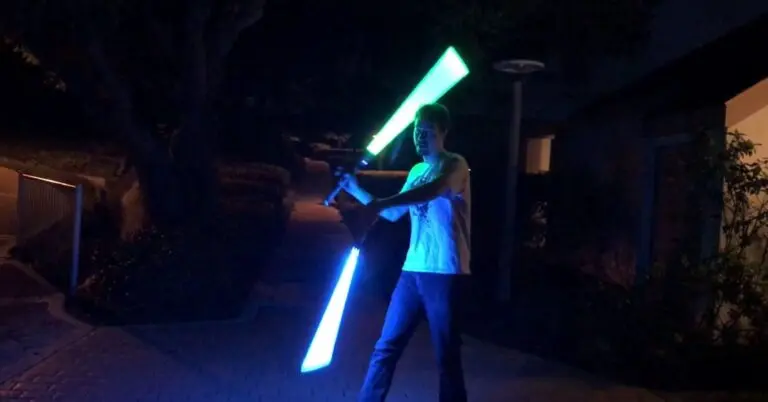
This is where the blade itself lights up. A strip of individually addressable lights runs its full length, so the blade ignites from the hilt up, flares at the strike point and moves colour along its length.
It carries the largest stock sound library of any core — 34 fonts — with smooth swing and preset banks to choose from. It is also the largest range in the catalogue: 0 complete sabers, from $109.99.
The honest counter: a pixel blade carries its electronics inside it, so these hilts are rated for light duelling. Display, cosplay and lighter sparring suit it; regular hard contact suits a baselit core better. And preset banks are chosen, not edited. If you want to write your own, that's Proffie 2.2.
Best for
SNV4 PRO
SNV4 PRO is the other pixel core: the same lit-strip blade, igniting from the hilt and flaring where it's struck, as Xenopixel V3.
On colours, programmability, smooth swing and Bluetooth the two are identical. The one difference in the data is the stock sound library — 27 fonts against Xenopixel's 34. Both start at $99.99, and on a given hilt either one can be the cheaper. 197 complete sabers carry it.
So it isn't a step above Xenopixel V3 or a step below it. It's a sideways choice, and the hilt makes it for you. Like every pixel core, it's rated for light duelling.
Best for
Proffie 2.2
Proffie 2.2 runs the same pixel blade with the firmware opened up. Blade styles, effects and sound fonts become things you edit rather than things you pick from a list. It's the only core on the ladder that works this way, and that is the whole case for it.
It is not a bigger tier in any other sense. Its stock library is 25 fonts, the smallest of the three pixel cores, with smooth swing and Bluetooth alongside. 196 complete sabers carry it, from $109.99.
The cost is that the editing is yours to do. If you've never opened a config file, expect a learning curve. Like every pixel hilt, it's rated for light duelling.
Best for